Sunday, December 30, 2012

Images of Christ

Dear Austin,

You probably won't read this for many years, but when you do, I hope it helps you in some way.  Today I was in Magdalene's class, and the other teacher gave a great year-end wrap up of lessons taught.  Most of the lessons were taught before I got called as a co-teacher.  She did an excellent job, and brought a great love to the class.  Your teacher carries the same love for you, and always tell me what a "sweet little boy" you are, and how she just loves you and your cute little cheeks.  But imagine that being said with a thick southern accent.  That's how your teacher tells us she loves your sweet guts. haha!

In Magdalene's class, there was something I wanted to share with you.  Actually from the whole of Primary.  During song time, the sister leading the music showed a picture that was meant to be baby Jesus.  I kind of laughed, because it's clearly a photo, and from what I can tell, there were no cameras in Jesus' day, but the sweet sister cooed at cute baby Jesus, and lots of the kids did too.  Kinda fun.  Anyways, I went to Maggie's class and we saw more "pictures", which were more in the form of paintings.  And guess what.  ALL of the pictures of Jesus were pretty much the same.  The same face, same beard, same body, same hair color... same Jesus!  Oddly enough, while I know it's a painting of Jesus, he didn't look familiar to me.

There's a book I was reading a few weeks ago called Nephi's Isaiah (written by a man named Denver Snuffer).  I hope you read it when you're older.  In it, the author spends some time writing about how Jesus is often referred to by many names, one being the Lamb of God.  This was a really neat section, because he talked about how Jesus looked young, like a "lamb".  He differentiated between a sheep and a lamb, and made the clear distinction that Christ was everything that the older, wiser people didn't expect.  He was teaching Priests in the temple when he was twelve years old.  Did they want to hear someone preaching to them, expounding what only the Scribes should have known (Scribes were the guys who kept the records)?  At this time, Jesus was only barely older than Josten is now.  I think they probably didn't like that.

To continue that idea, Jesus didn't look the part, and didn't always act the part.  He hung out with harlots, thieves, poor people, lepers... you name it.  Perhaps if He came to America, He might hang out with people with tattoos, prostitutes, drug addicts, homeless people.  People who clearly needed help and love.  But when he was mortal, Jesus didn't please the elites or the rich, despite being much wiser than they were.

As I thought about that in these paintings, it doubly made me think, and wonder why Jesus didn't look familiar to me, even though I've seen these pictures hundreds of times.  In these paintings, it looks like the same person was used to represent Christ, but he looks old.  Does Jesus really look that old?  He looks at least 40-something, nearing 50-something.  Not that that's old, but it's certainly not early 30s, which is when his ministry took place.  That's younger than me, and you should know, I look young.  In fact, Jesus is said to have been killed about 33 years old.  That's a year younger than me now.  I bet you won't even remember me looking this young, by the time you read this!  In any event, personally, I know that more respect is generally given to someone who looks older, even if they're not older.

For example, Daddy and I are near the same age, but Daddy will get treated more like an adult at times than I do.  Why?  I suspect at times it's because I'm short, and I look young.  I look like a kid.  Perhaps more like a sheep than a lamb, despite having four children.  At times the lack of respect is obvious.

This makes me wonder, if Snuffer's descriptions are correct, was the lack of respect given to Christ added upon by the fact that he looked young?  I don't know.  Just something for you to think about.
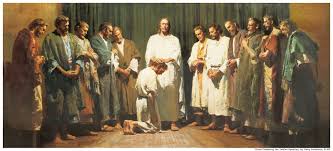


The reason I'm writing this to you is that you have a sensitive spirit, and I expect that as you grow,  you will always have a close relationship with the Savior, no matter what happens in your life.  Despite seeing these pictures, I hope you will envision your own picture of Jesus, and I hope his face is more familiar to you than this man, who appears to be much older than a "lamb".  He appears more like a "sheep".
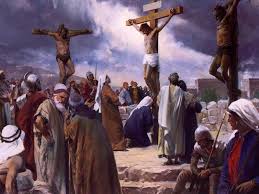

Another part of the sister's lesson was spent a bit on this, and how Jesus was crucified.  She explained that of all the ways to die, crucifixion is one of the most painful.  Jesus not only suffered for our sins in Gethsemane, but also severely on the cross.  For hours, from what we are told in the scriptures.  Can you imagine?  I remember feeling the most severe pain in my life that came and went for a few hours, but it wasn't constant like this must have been.  Excruciating.

Following this picture, the sister showed this one.
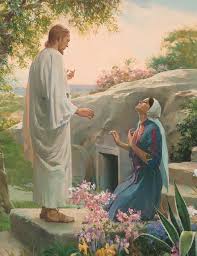


She asked why Jesus kept the marks on his hands and feet and side.  She answered that they were scars that Jesus would be "proud" of, so he could always remember what he had done for us.  That made me raise an eyebrow, and wonder if I agreed.  (I always keep an ear our for the word "proud".  Maybe "honored" might be a better word?)  I always understood that these marks were for us to recognize Him.  This made me wonder how much of our scars will be taken away.  Some of them are meant for us to remember what we have learned.  This is true on not only physical, but also emotional and spiritual levels.


Lastly, this picture was shown.  (I was really enthralled by her storytelling, probably more so than the rest of the class.  It was as if I'd never heard these stories before.  She did a really good job.)  She said that when Jesus comes again, it won't be quietly, in a stable when he first came.  She said that the angels said when he comes again, it will be coming down from the heavens, as he had ascended, and will be done in great glory, as this picture depicts.  What a wonderful thought.

It made me wonder if it would be while I'm yet alive.  I always thought, as a teenager, that He would come by the time I was the age I am now.  And here I am, the world is changing rapidly, but He still has not come. There are many more signs and prophecies that need to be fulfilled, but I still look forward to that day with hope, whether or not it is in my lifetime.

I hope that if it's during your lifetime, you're prepared.  There's a lot to experience before that happens, and I hope that we do everything we can to help you do whatever your mission is in life.  We love you lots.

~Mom <3

p.s. - all these photos are by Harry Anderson, and while I copied them from various sites, I believe the LDS Church holds the rights to their use.  xo

Saturday, December 29, 2012

Alma 18:39-42 - The Element of Time

Dear Magdalene, 

Tonight while we were reading scriptures, we read about Ammon and Lamoni, the Lamanite king, and his wife.  (I'm sad we don't know her name, but maybe we can call her Magdalene too?)  One thing that I noticed, which I never noticed before, was an element of time.

The other day, when I wrote Josten, I mentioned how after receiving a Priesthood blessing when I had mono, I had to wait for time to pass.  I wasn't "healed" instantly.  Tonight when reading about Lamoni, I realized there was more time involved in this story than I initially thought.

Previously, I thought Ammon had been expounding his faith to the king, and then the king thought about it a moment, and instantly fell to the ground.  That's kind of the way we talk about it in Primary, when we reenact the story, isn't it?  Tonight, I realized there was more time involved than I ever thought about.

It says in the verses that we read, how Ammon basically expounded everything he could about the gospel of Jesus Christ, from the beginning of the world, to "all the works of the Lord".  (Alma 18:39)  He told him everything – probably more than I've ever thought to teach you.  After that, here's what it says:

40 And it came to pass that after he had said all these things, and expounded them to the king, that the king  believed all his words.
Did you catch that?  The biggest word that stuck out to me tonight was "after".  After Ammon had said all these things.  I always thought that what happened next happene while Ammon was standing there.  But it seems like the king needed a little bit of time to have the following happen:

41 And he began to cry unto the Lord, saying: O Lord, have mercy; according to thy abundant mercy which thou hast had upon the people of Nephi, have upon me, and my people.

He began.  This doesn't seem to be a once and done thing.  And perhaps it wasn't just audible crying, or sobbing crying.  I would like to think that these were intense thoughts, which reached to the heavens, not in volume, but in sincerity.  They were not "Heavenly Father thank you for this day thank you for this food please bless it..."  This was thoughtful, heartfelt prayer.  You give heartfelt prayers, but sometimes I think it would be good for all of us if we tried slowing down a bit, and really thinking about what we're saying.  And when we're alone in our prayers, we can try to truly "cry" unto the Lord.  You know how you cry to me when things aren't fair?  Or when you get hurt or scratched, or when your heart hurts?  This is the same kind of crying we can do with God.  He listens, and He can help us, even better than I can help you.

It's also important how Lamoni prayed here as well.  Notice what he said, because what happened next is marvelous.
42 And now, when he had said this, he fell unto the earth, as if he were dead.

A few verses later, Lamoni's wife calls Ammon in to talk to him, and what surprised me tonight was that if Ammon had been there when Lamoni had fallen to the earth, he would have already known what was going on.  But it seems that the only way he knew, when he came to talk to the queen, was through inspiration.  So it seems, that Lamoni took some time to ponder, think about, and then truly cry to the Lord about what he had learned.

Time is really important.  Sometimes we expect answers so immediately.  But if we were to get all the answers immediately, what would we do with the rest of our time here?  We could have all the answers given to us when we're babies, and then live out the rest of our lives in bliss.  That might be fun, but it doesn't seem to work like that.  There is importance in the element of time, and it seems that the faster we use what we learn in the time we have, the faster we grow.

Another thing about time – it's one of the few things in this life that you can never buy more of.  You have to use it wisely.

There's so much more in these few verses, but we'll save that for another day.

Marvelous, eh love? :)

~Mom <3  

Helaman 4:13 - Boasting in Strength

Dear Josten,

I know this is probably strange, reading a letter from your mom.  But I hope you enjoy how the verse I read might apply to you.  Today's verse is Helaman 4:13.

And because of this their great wickedness, and their boastings in their own strength, they were left in their own strength; therefore they did not prosper, but were afflicted and smitten, and driven before the Lamanites, until they had lost possession of almost all their lands.
I read three verses before I came to this one, and this one seemed to be the one I should write a about for you today.  To set the stage, Mormon is talking here, about what's going on.  He's abridging the plates at this part, and narrating.  It's about 31-30 B.C., and Jesus has not yet come to visit the Americas, but the leaders of the people - specifically noted as Lehi, Nephi, (not the original Lehi and Nephi, but Helaman's sons) and Moronihah (Captain Moroni's son) are actively preaching and prophesying.  They are actively warning the people, giving messages directly from God.  This verse lets us know why this preaching and prophesying is going on.

One last thing - a few verses prior to this, we are told that the criticism given is to not only the Nephites, but more specifically to those who "professed to belong to the church of God."  (vs. 11)  That's us.  We profess to belong to the church of God, don't we?

Ok...  so...

Because of their great wickedness - this is the Nephites being referred to.  They were supposed to be righteous, but at this time, they were being directly called wicked.  I bet they thought that so far, they had been God's "chosen" people, so they probably thought that they would always be safe and clear from being condemned, or put down for their faults.

Part of their great wickedness included their boastings in their own strength.  What does boasting mean?  It means they bragged, and made it clear that they could do things on their own.  Sometimes we like to think we can do things all by ourselves.  We think that it's good to be self-sufficient, and our society usually thinks "pride" is a good thing.  We say, "Oh, I'm so proud of you for _______."  In actuality, being proud is never referred to as a good thing in the scriptures, and always is a negative quality.  So when the Nephites boasted in their own strength, it meant they didn't rely on God anymore.  They thought they could do it all by themselves.  This isn't to say we don't do the best we can, but it's always important to acknowledge God's hand in our success.  Without doing so, we are boasting in our own abilities.

Because of their wickedness and boasting in their own strength, they were left in their own strength.  I like to think of this in terms of group projects at school.  One person can say, "I'll do it all by myself," and they'll complete the group project on their own.  When they get a sucky grade, they realize that if they had asked the rest of the group for help, it would have likely been a better grade.  That's completely how it is with Heavenly Father.  Except that He does most of the work, and we like to think we're doing something much more than we are.

Therefore they did not prosper - this is a direct result of them trying to do the group project on their own.  They got an F.  I bet they wished after the fact that they had asked for a little help.

Due to all this, they were afflicted and smitten.  Do you wonder what that might mean?  How have you been afflicted and smitten in your life?  Do you remember how or what happened?  I remember sometimes feeling afflicted when I got sick for months on end with mono in college, and on my mission.  I knew I could be healed in a Priesthood blessing, but blessing after blessing, I waited for healing.  I wondered if I was doing something wrong, or if maybe God was punishing me for doing something wrong, whatever it might be.  No one would tell me that, but I still wondered.  Eventually I did get better, but it took time.  It wasn't like watching those guys on tv, hitting your head and telling you to "be healed" or "be saved".  I know some people have quick results with Priesthood blessings, but for me, time was always a factor.  Maybe Heavenly Father wanted me to learn something by being sick?  I think so.  Maybe it was a result of my body saying it needed more rest than my mind would give it.  Anyways...

And what does smitten mean?  I think it somewhat goes hand in hand with the next line, which is that they were driven before the Lamanites, until they had lost possession of almost all their lands.  I imagine being smitten means being beat up.  We're very fortunate and extremely blessed to have been born to live in a country where we don't have to live in fear of being smitten.  But this freedom is not necessarily guaranteed, and if the people in this land seek wickedness and to ignore the Lord – like what happened to the Nephites after they had been here in this promised land – we too might find ourselves smitten and driven before our "enemies", until we lose possession of almost all our lands.  It might be gradual, or it might be more direct, through war.  Thus far in our lives we have never experienced war, or fear which many in other countries have to worry about.  It is so important that we do everything we can to not forget God in our lives, daily, so that we may enjoy freedom.  

This is not to say that we won't ever experience being affliction or being smitten or driven from our homes or land.  Life is not guaranteed to be pain free.  But on the whole, and in general, I feel that no matter what, God can at least give us peace while we endure trials.  And I still have hope, that as a whole, the people of this land could achieve a state of Zion if they wanted to.  It happened in Enoch's time, and there is nothing in our time saying this is impossible.  

Love you babe.
~Mom <3  

Thursday, December 27, 2012

A More Major Shift

This blog/website has been in existence for over a year now.  My focus has changed with the tides, seemingly, and now as the new year is approaching, I'm considering changing it again.  As it has seen such astronomical growth, and I receive nearly a thousand comments a day, and the sheer scholarship and religiosity of this site is beyond compare, I'm seriously pondering the idea of shifting my target audience.  To whom?

My children.

While I hope that whoever ends up reading this blog is enlightened, I have no idea if anyone is ever helped, inspired, depressed, or whatever by these thoughts.  And I try not to care, in truth, as I don't seek anyone's glory or appreciation.  That said, I do want to spend what time I spend at this computer with thoughts left for  those who might cherish them if a day comes when my mortal body is no longer here.  Feel free to read along, but understand that if it appears to be written by a novice, or overly childlike, that is the end goal. :) 

Wednesday, December 26, 2012

Tearing Down

I just dropped by my blogroll a bit ago to see if any of the blogs I follow had anything interesting to say.  I found a feature on "Shameless Popery" quite interesting.  The three soon-to-be priests took less than a day after a very unifying holiday to post some interesting work on why Latter-day Saints are misdirected in not praying to Jesus.  If you'd like to read the whole post, you can find it here.  In upcoming days, I might just describe how their assessment, while somewhat well-researched, is not accurate, according to scripture.

Perhaps I am being hypocritical, but I like to think that I support many faiths in open-mindedness.  I don't judge, or seek to tear down, despite disagreeing in details.  While God, in the end, knows ALL, I am thankful for other faiths which point to Him, despite their differing in details.  Maybe I'm wrong in this, and maybe I'm right.  But it is disappointing to me when I realize how much time is spent in many faiths, tearing down others, which could be much, much better spent assisting their membership in growing closer to God.  I hope that my previous words on this blog regarding my visits or thoughts of other faiths have not been seen as tearing down, but simply as something different, and perhaps uncomfortable for me if it was not something I preferred.

That said, I do not believe there has been one time where I have visited another church and not heard some sort of anti-Mormonism, either outright or severely alluded to.  Many times I've wondered if the person bringing me as a guest alerted the preacher/priest that I was coming.  In general, it seemed that that was not the case, but just the pattern of preaching.  I know "Mormons" have come a long way since Joseph was martyred over his beliefs, but it's still sad to see that we can unite over charity, disaster relief, and supporting marriage and life, but yet when we get down to religion, so many spend so much time tearing down.  It's disappointing.  


Monday, December 24, 2012

Snowy Christmas Eve

Tonight I attended a Christmas Eve service at a church that I believe some of my ancestors attended (Deininger family).  I haven't made a direct connection on how exactly they're my ancestors, but that's just because I haven't found the links yet.  I'm quite confident that my assumption is correct, as the family name on the headstones in the church cemetery link to a name uncommon for this area.

(A snowy Bindnagle Lutheran Church, Palmyra, PA, Christmas Eve, December 24, 2012, 8:16 pm)
I've ridden a school bus by this church nearly every day when I went to school for my entire childhood.  I've held my breath as we passed by the two adjoining cemeteries, and if I took a breath next to the tombstones, it was considered bad luck.  I never knew my ancestors were buried there until this last year, when I found their names among the burial records.  It seemed wild that for quite a long time, my family has frequented these very same paths that I have traveled more than half of my life, although they likely used horses, carriages, buggies, bare feet or even sleighs.

Yet this was the first time I've *ever* entered the doors of the chapel.  And true to style, I was late. :) (But only by a minute or two.)  It is Christmas Eve, after all, so I was a bit tentative to leave my husband and kids at home, but they didn't seem to mind me going.  It had started snowing a few hours earlier, so the roads became a bit slick, and as I arrived, the other cars were plodding along.  It reminded me of those imagined sleighs.

Walking up to the doors, I almost didn't go inside.  There was music being sung, and I didn't want to interrupt, but I decided to anyway!  ha!  The door was so old that I almost didn't know how to work the latch.  Stepping inside, a woman smiled and gave me a candle and a program.  I soon realized that they were necessary for participation.

The inside was small!  The building always looked so large from outside, but sitting in the third pew from the door, there were only two rows yet ahead of me.  There was a center area for the Pastor to perform the communion, and then two side areas for pews, so that the whole setup was a small U.  There were also balcony seats, although the area above was not lit, so I didn't see much of it.

The pews looked to be original, and the decor and architecture looked like it was the best that could be done by laypeople, 300 years ago.  It was mostly wood, and in the dim light I couldn't tell if there was a faux finish on the walls, or if the lines going each way were part of the original design.  It appeared to imitate marble.  I looked at the worn back edge of the pews, and wondered if these were the same that donned the chapel when it was originally built.

Why am I writing about the details of this?  Why did I go?  I sat there, wondering the same thing.  I try to be non-judgmental about other religious services, and still I sat there, pondering it all.  The message was all pre-written down on our program.  The ancient organ - older than the Mormon Tabernacle Organ - sounded like a baroque organ, very literally.  It reminded me of the merry-go-round music at Hersheypark, minus the stomping drum.  It played familiar hymns, and the choir and small congregation sang.  Eventually, an offering plate was reverently passed around by ushers, and soon after communion was offered.  Everyone seemed to partake of it, except me.

This felt interesting, especially given my recent post on the Sacrament.  This church offered, via writing in the program, for every "baptized Christian" to partake of the communion.  Little children were invited to come and receive a blessing from the pastor.  All were ushered to the front, row by row, by men or women ushers, to take a wafer from the female pastor/preacher (sorry, I was late and missed the formal introduction of who she was), and then a small cup of wine.  I was petrified, and thought it was odd that I felt so.  I've never had straight wine in my life, so I prayed, "What do I do?  Why am I here?  Am I the only one who won't be partaking?  Are they going to think I'm "unbaptized" and will I get harnessed or preached to at the end of the sermon about being 'saved'?"  It was an interesting sentiment.  I wonder if this is how many people feel, who attend church for the first time.

Shortly after, the service ended.  I should add that in the middle was a sermon on the birth of Jesus.  The preacher walked up several stairs to a podium (I assume this was created so those in the balcony could see?), where she looked down about 7-8 feet to the congregation, and read every part of her message.  It was peculiar to me.  I tried not to judge, but I remembered my grandmother always having a problem when someone at our LDS Church would "look down her nose" while she would conduct the music from the stand in front.  It reminded me of her comments.

She preached about the busyness of the season, and in a way shunned "spirituality" and "spiritual books", in the sense that she felt they were an imitation ,and that they don't bring one to Christ.  I laughed as she then went to lead us in an exercise that those spiritual books would call "visualization".  She invited us to put ourselves in the position of Mary, in a stable, holding the Christ child.  It was a beautiful visualization. :)  (haha.  I wonder if she'll ever know she used a "spiritual" technique to help us draw nearer to God.:)  

I am thankful to have visited this service, and to the woman who offered me a program and a candle so sweetly.  I am thankful to have experienced another denomination's worship.  Although not entirely different than my own, the spirit of the meeting was vastly different.  While I'm not yet sure if it would have felt more comfortable if I were a regular visitor, I know that it helps me appreciate the spirit that I regularly feel within the walls of the church I am a member of.

Yesterday, I listened as my former bishop and now a member of the Stake leadership shared a talk on various things, one of which was a beautiful explanation of Mary's many descriptions.  On and on he went, listing the countless descriptions listed in scripture of her.  It was beautiful to think of how extraordinary she was.  A "chosen vessel", most fair, above all other virgins.

Following him was a newly returned missionary, who used absolutely no notes for his talk.  I bent over to my son and said, "Look, he's not using any notes at all.  He's speaking with the Spirit."  The only time he looked down was to read a verse from scripture.  Now, I know and understand that just because someone doesn't use notes doesn't mean they're speaking with the Spirit.  But it is my determination that he was.  I was spellbound, seemingly.  Likely only in his early 20s, this young man spoke with power and authority from God.  With inspiration and guidance of the Spirit.  He spoke truth.

While I know nothing of the true character of the returned missionary and the preacher who gave tonight's sermon, I noted the difference of the spirit felt inside of me.  Honestly, it felt like the difference between spiritual chilliness and spiritual warmth.  The verse "they draw near unto me with their lips but their hearts are far from me" went through my head tonight, again and again.  I wondered if that was the case, or if the preaching done was sincere.  I hope so, but I'm glad it's not for me to judge the heart behind their words.  I simply judge the warmth I felt (or didn't feel) inside.

Thankful indeed for the memorable experience of attending this service, on the snowy Christmas Eve.  May you each experience the warmth of the Savior's love and His Atonement this Christmas season, and each day thereafter.

Much love,
~Jen

Thursday, December 20, 2012

Sacrament Specifics

This post was written by me a week or two ago.  I hesitated to share it at the time, because I wanted to make sure I felt comfortable sharing after some time had passed.  I hope in sharing, someone is helped along their path.

A few weeks ago I had the opportunity to partake of the sacrament.  It was before my appendix decided to get all fussy.  Due to the surgery, I missed two weeks of church, and when I returned last week, I arrived several minutes late.  Walking into the church foyer, I assumed that I had missed the sacrament.  Much to my joy, out walks the deacon with the sacrament trays, and I planned on partaking of it.  He asked me, "Did you hear the prayer?"  I said, "No."  He then told me he was instructed not to allow me to partake of it if I missed the prayer.  I was ticked.

(19th century sacrament tray and cup)

So many things ran through my head.  I felt like I was suddenly Catholic, and the whole ward got to see if I partook.  My friend sat across from me in the foyer, and she was prohibited from partaking as well.  I wondered if she was as annoyed as I was, but she seemed cool and collected.

(photo source)

After he walked away, I nearly cried.  It had been weeks since I got to take the sacrament, and it's very special for me, regardless of whether or not I get to focus, hear the prayer, or juggle my kids.  It has a grounding affect, and it centers me for the week.  I don't know how, but perhaps that's part of the miracle of it.  So hearing this sweet little deacon tell me he was told not to allow me to really threw me for a loop.

All sorts of crazy things flew through my head.  Did the Priesthood leaders really instruct him not to allow me to partake?  Was this some new rule that came through the Church in a letter that I just happened to not hear read over the pulpit?  If I questioned my leadership, would I be considered apostate?  Because if they did approve this change, I would certainly have some serious beef with the new policy.

Then I heard the conducting bishopric member say over the hall speakers, "Has everyone had a chance to partake of the sacrament?"  NO!!!  I didn't!!!  I wanted to scream, but I knew storming into the chapel to make a scene would not get me far.  

Luckily enough, after the meeting was over, this same member of the bishopric brought me some photos that were taken at a recent activity.  After thanking him for the photos, I asked him if there was some new policy that the deacons were to ask me if I heard the prayer before taking the sacrament.  He looked at me with bewilderment.  He said, "No, absolutely not.  What happened?"  I explained to him the situation.  He said, "Well I asked if everyone got a chance to partake of it."  It dawned on me that him asking that abnormal question was for me.

He said he would straighten things out with the Priesthood and see what was going on.  Yesterday, he caught me by the shoulders, gave me a hug and said that what had happened should have never happened.  It brought tears to my eyes, because I knew it was true.  More than that, I knew that my leaders were not ticked that I questioned what was going on.  I had every right to do so, and they took no offense, as some may have.  But the most important part was, I gained a second witness, beyond my own knowledge and surety that GOD knew that I wanted the sacrament, and He knew that I needed a witness that my leaders were in tune with HIM.  This one, this instance, this day, was listening closely enough to the Spirit.  I was the one that was being spoken to when he said, "Has everyone had a chance to partake of the sacrament?"  Despite me not answering, God was telling me He was mindful of me.

I have so many questions about the sacrament, and I hope to have them answered.  But one thing I know for certain.  This is one ordinance that no deacon (who does not hold increased priesthood authority) has the authority to say that I am not permitted to partake.  

Wednesday, December 19, 2012

Low Maintenance

Loved this line from another blog's post today:

"It takes a life-time of learning and living to become high-yield, low-maintenance Latter-day Saints."

-Spencer, from unblogmysoul.wordpress.com.

I agree.  Thank you, Spencer.